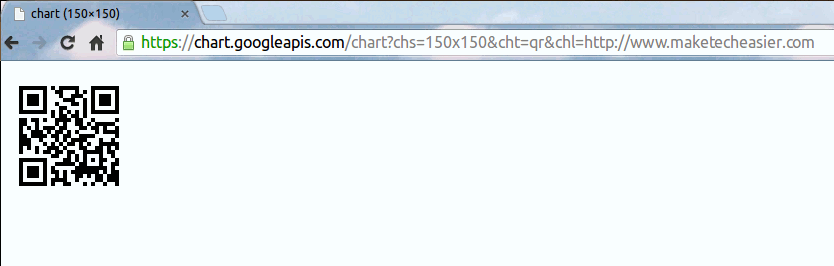
Previously, we shown you how to create a QR code in Google Drive. All you need to do is to paste the formula into the cell and it will generate a QR code based on the content of another cell. Apparently, using the same API call, we can quickly get a QR code by just visiting a URL.

In your browser, paste the following URL:

https://chart.googleapis.com/chart?chs=150x150&cht=qr&chl=

At the end of the URL, append the content you want to embed. For example, for a QR code with a URL link:

https://chart.googleapis.com/chart?chs=150x150&cht=qr&chl=https://www.maketecheasier.com

or a QR code with text:

https://chart.googleapis.com/chart?chs=150x150&cht=qr&chl=How are you

and this is what you will see:

qr-code-url

Simple and fast!

Image credit: Where is the QR code…?

How To Open Multiple Links in Chrome

You might come across a webpage with several links that you want to check them out. If you’re looking for a fast, efficient way to open links in the fastest way possible, then LinkClump might just help you with that.

Converting Files In Google Drive With DriveConverter

If you’re looking for a built-in tool to convert files in Google Drive, then try DriveConverter, a web app and Chrome extension specially built for Google Drive. It offers more flexible conversion features for documents, images and music files.

How to Better Embed YouTube Videos Into Gmail

If you want to embed Youtube in email rather than just pasting a link, this guide will show you how to attractively embed a YouTube video into Gmail.

Add Events to Google Calendar From Anywhere in the Web

One of the biggest complaints about Google Calendar is that you can’t add events to Google Calendar without visiting the site. With Spot – Calendar’s Best Friend, you will be able to add events to Google Calendar, whenever you come across one anywhere in the Web.

How to Enable Two-Factor Authentication in Buffer

Buffer has added a new 2-Step Login security feature to their web app. This tutorial will show you how to enable two-factor authentication in Buffer.

What Is the OpenSSL Heartbleed Bug and Why Should You Care?

Things just don’t work the way they should in the Internet. Here are some things you should know about the OpenSSL “Heartbleed” bug and how it affects you.

What to Do When You’ve Been Hacked

As of late, many people have been hacked and are the victims of password leaks and Trojan horse infections. The following are some tips if it happens to you

Stop Facebook from Selling Out Your Browsing Data

Facebook stated that it is going to share the data it has collected with advertisers so they can show you more relevant ads. Here is how you can prevent it.

How Visa May Be Making Online Payments Safer

Instead of giving your credit card, Visa came out with a token concept to enhance web security. Is it useful? Let’s check it out.

How Does Public Key Encryption Work?

One way to encrypt your files is via the public/private key. Let’s take a look at the public key encryption concept to understand how it can protect you.

How Facebook Scammers Use Disasters to Make Money from You

Facebook scammers love to turn the misfortune of others into an opportunity to make a quick buck. Here are some of the techniques they use.

Easily Make Old Extensions Work with Current Version of Firefox

Sometimes, you are not able to install old extensions as they are not compatible with your current version of Firefox. Here is how you can force compatibility and make them run.