The Internet has entered a new era in which people can start trading in currencies that are not run by governments, called cryptocurrencies. Bitcoin was among the first to actually hit the fray, followed by Litecoin and PPCoin. These currencies revolutionized the way we see money and paved the way to new customer interactions. Though, the road is not as smooth as you think. Bitcoin, as the flagship digital currency of the Internet, has experienced a lot of bumps along the road. We’ll elaborate on this and discuss some things you should really know before investing in digital cryptocurrencies.
1: The Role Of Cryptocurrencies Is Probably Not What You Think
A currency like Bitcoin isn’t created to maximize on dollar value. That’s just not how it works. The whole concept behind Bitcoin is the attempt to create “sound money.” For centuries, we’ve used gold in exchange for other things. It had scarcity, making it valuable. It had a uniform composition, was portable, and didn’t degrade over time as easily as many base metals. The limiting factors made it an ideal form of currency. Afterwards, we started representing it with bits of paper (hence the term “representative currency”). This system eventually led to “fiat” currency; a system in which money is represented purely on faith, supply, and demand.
There are inherent flaws in all these forms of money. Gold is heavy, representative currency could be lying about how much gold it represents, and fiat currency can be printed out of thin air with no regard to any sort of protocol.
Here’s where cryptocurrencies come in. Currencies like Bitcoin cannot be printed out of thin air like a fiat currency. They can be “mined” into existence, but the amount of resources required for that are tremendous as the global pool of Bitcoins grows. The currency cannot reach a global total of anything above a certain limit, making it superior to both the fiat and representative currencies in this respect. This previously-mentioned aspect also makes it rare to attain. The fact that it’s digital makes it very easy to transport. Transactions through an exchange require only near-zero, if not zero, fees.
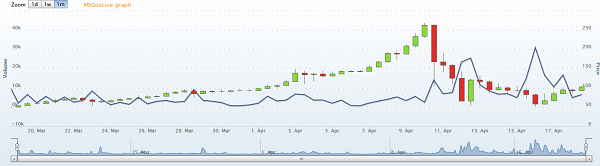
However, just like with almost any other currency, there are booms and busts which can take you by surprise. One day, you could notice a significant drop in the value of your cryptocurrency of choice. While the value might quickly stabilize, there’s no guarantee that it will. Investment is a risk, which is why you should have a portfolio of different cryptocurrencies rather than relying on one.
2: Cryptocurrencies Are Not *Completely* Immune To Government Forces
Contrary to popular myth, currencies like Bitcoin aren’t magically immune to government intervention. On May 15, 2013, US authorities got their hands on accounts in the Mt. Gox exchange (a major Bitcoin exchange) because the company did not register itself as a money transmitter. That should be a sign that the hand of government can still make things difficult for people who want to remain clandestine.
There’s still a bigger threat, though. Major economic interests can actually get into the market and manipulate the value of the currency by buying and selling it as they wish. Governments have the resources necessary to destabilize currencies considerably. All they have to do is buy up a considerable amount and then sell the entire heap in one blow. The action of selling will bring the price down considerably. In Bitcoin’s case, all governments would have to do is buy up the entire supply, which is a cinch for them, and then sell it all again and again until it falls to the desired value.
If there’s a single inherent flaw in cryptocurrency, it’s the ability for major industrialized nations to really ruin the party for everyone by just playing by the same rules everyone else follows.
3: They’re Not Immune To Hackers, Either
Did you know that most of the passwords you have on older forums around the internet are encrypted with MD5? This was an algorithm invented in 1992. It only took 12 years for someone to finally crack it profusely, to the point where it became useless. MD2, RipeMD, HAVAL-128, and SHA-0 were all from around the same time period, and all of them were cracked in the same year (2004). The last thing you want is for your Bitcoin, Litecoin, or PPCoin wallets to be compromised.
Bitcoin is encrypted with SHA-256, which is a relatively public-key encryption algorithm that doesn’t budge as easily as its predecessors did. It’s quite something, but don’t forget that MD5 was quite something in 1995. It’s 2013, and SHA-256 was created in 2001. Right now, hackers don’t have the kind of hardware required to easily crack an SHA-256-encrypted entity laying around. But once that algorithm becomes obsolete, it means that Bitcoin is in danger. Bitcoin’s engineers and fans are working on a solution for when that time comes, and they’re hoping to have something lucrative when a new algorithm should take SHA-256’s place.
4: Less Popularity = Less Likely To Be Targeted
The ideal coin to trade in would be one that’s not highly popularized, but also is backed up by sufficiently strong cryptography that won’t allow it to fall victim to any eventual attacks. Bitcoin is going to fall hard one day. This is for sure. How do I know? I call it the “Windows Effect.” Windows’ popularity as an operating system has made it a target of hackers around the world. As a result of this (and many other factors), Windows became prone to getting viruses.
Bitcoin is currently the most popular cryptocurrency. Do the math. It will fall victim to attacks because of its popularity and eventual weaknesses.
The Future Of Cryptocurrency
Pandora’s Box has been opened. There’s no turning back. Cryptocurrency has taken off and governments will go toe-to-toe with them trying to keep their ideas of balance in place. As cryptocurrencies get more popular, they’ll have to step up their game to gain people’s trust and win the hearts of major investors who are willing to accept and transmit payments with them. So far, the market looks very small and covers only a very narrow niche. We’ll see how far it grows, but I have faith that people will continue to be innovative as long as it’s in their advantage and for the well-being of a thriving market.
Got your own thoughts on this? Leave a comment below!