How many times have you come across a type of font on the web that you really liked and wanted to know the name of? Web developers often use tools like Firebug and Webkit for this task, but if you’re not familiar with those or just want something easier, WhatFont is the perfect tool for the job.

WhatFont is a Chrome extension that will identify the fonts used on web pages just by hovering your mouse over them. It can even detect the service used for serving the web font (ie. Typekit, Google Fonts).
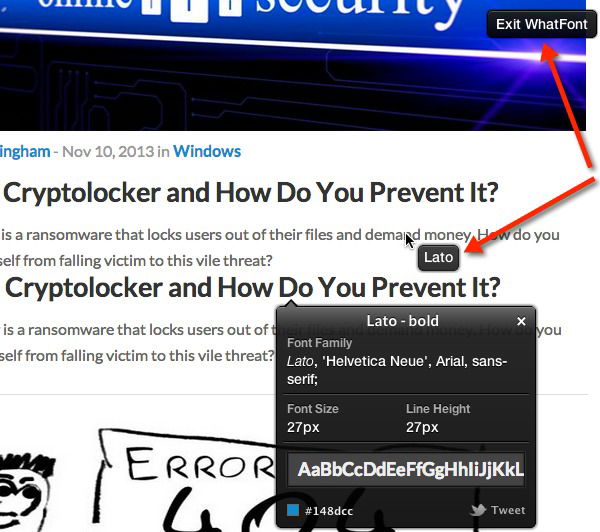
Using the WhatFont Chrome extension, you can find out the name of any web font on a web page.

Once installed, you’ll need to reload any tabs in your browser that are already open, or go to a new tab. Next, click on the WhatFont browser icon and your mouse will turn into a web font inspector. Then you can hover your mouse over any font on a web page and you will see that font’s name displayed.

Clicking on a font will display even more info about it like the size, height and color. When you’re done inspecting the page, click on “Exit WhatFont” at the top right corner to return your mouse point back to its regular state.

How to Compose A New Email Directly From Your Browser [Quick Tips]

Regardless which email client you are using, when you need to compose an email, you will always need to switch to your email client and click the “Compose” button. Here is a neat trick for you to compose a new email directly from your browser.

5 Dictionary Tools for Google Chrome

Do you remember back when you had to know how words were spelled? Here is a selection of dictionary tools for Google Chrome.

4 Popular Bitcoin Alternatives and How They Compare to Bitcoin

The cryptocurrencies is here to stay. Bitcoin may be receiving the most attention at the moment, but it is definitely not the only one around. There are tons of Bitcoin alternatives. Here we will take a look at the 4 popular Bitcoin alternatives and see how they compare to Bitcoin.

9 Ways to Make Better Use of Gmail Filters

Gmail filters is a good way for you to organize your inbox without you doing the manual work. Here are a few ways that you can make good use of Gmail fliters.

Identity Theft on The Internet: Can You Prevent It?

What if someone else had enough information about you from the web to become you? What can you do to prevent identity theft? We’re here to help you out.

Don’t Like Gmail’s New Always Display External Images Feature? Here’s How to Disable It

By default, Google has decided to make it so that Gmail will always display external images in your email. If you don’t like this, here’s how to disable it.

How Image Compression Works: The Basics

Do you know that you can easily compress your high-res images to smaller size without affecting its image quality? Here’s how image compression works.

Does Disabling DHCP on Your Router Really Help Your Security?

Are you confused on what DHCP is and if you should disable it to make your network more secure? You won’t be after reading this.

Everything You Need to Know About The “Rosetta” Flash Exploit

You are probably not aware that Flash has an “Rosetta” exploit. Here is what you need to know about Rosetta Flash exploit and what you can do about it.

MTE Explains: What Is an RFC?

You’ve probably seen the term RFC thrown around in applications that you’ve been using. What is this mysterious RFC that people been talking about? Let’s find out.

5 of the Best Gmail Plugins You Should Start Using Right Away

Email plugins are useful to help you get your tasks done on time. Here are some Gmail plugins to help you improve your productivity.

Easily Add Gesture Support to Your WordPress Site

Other than responsive design, it is also important to add gesture support to your website for mobile devices. Here is how you can do so in WordPress.