DuckDuckGo is a search engine that focuses on privacy and anonymity. We’ve talked about it in the past; it’s easy to use and a great alternative to search engine giants Google and Bing. Recently, a new feature has been implemented that lets you create QR codes on DuckDuckGo.

We’ve shown you various ways to create QR codes, but this is an additional method that can come in handy – especially if you’re already using DuckDuckGo as your default search engine.

1. Visit the DuckDuckGo website.

2. In the search box, enter “qr” followed by the text you want included in your QR code, for example:

qr Stop by for a visit -> https://www.maketecheasier.com
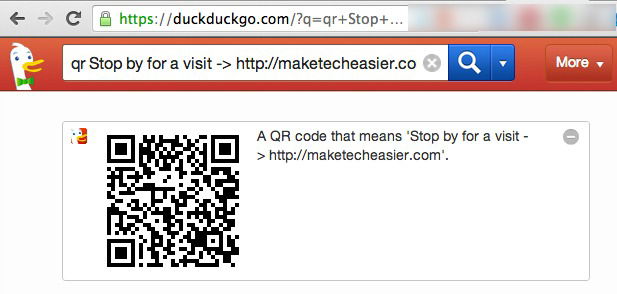
A QR Code created with DuckDuckGo.

3. Once you press enter, your QR code will be created and displayed for you to share; you can save the QR code as an image and/or use the URL from the address bar.

It’s important to note that depending on the QR scanner used, adding text may make the code unreadable. For example, when I scanned the above code on my iPad (via Mercury browser) it would not open. However, I created a new QR code with the just the URL and it worked perfectly; once scanned I was sent directly to the Make Tech Easier website.

How BitTorrent DHT Peer Discovery Works

Peer discovery is an essential part of the BitTorrent protocol. It’s how its downloads happen so quickly: You connect to multiple people, and each of them upload a little piece of the file to you. This article explains how the whole BitTorrent DHT peer discovery process works.

4 Reasons Why A Third Party DNS Server Is Better Than What Your ISP Gives You

You’ve probably heard of alternate DNS servers and how they could probably help you in some way or another. You may also wonder why you need to switch over. I’m going to give you some reasons why you probably should be using third party DNS server. You will end up wondering why you haven’t done it yet.

How to Delete a URL From Chrome’s Omnibox Suggestions

If you entered a wrong URL in Chrome’s omnibar, it will continue to show up in the suggestion, which can be rather annoying. Here is a quick way to delete a URL from the Chrome omnibar.

Add Any Website to the Chrome App Launcher with this Trick [Windows]

If there’s a website that you visit frequently, you can now add it to the Chrome App Launcher for easy access, thanks to this quick trick.

How to Set Up and Use Mozilla’s Firefox Accounts

Firefox Sync is getting better in the new nightly version of Firefox. If you have not setup your Firefox account, here is how you can do so.

How Image Compression Works: The Basics

Do you know that you can easily compress your high-res images to smaller size without affecting its image quality? Here’s how image compression works.

How to Organize History By Tags in Google Chrome

The History tool in Google Chrome can be in a mess sometimes. Better History provides a more structured way of searching and viewing recently visited sites.

Should I Use a Website Creator or Hire a Web Designer?

If you are starting to setup your website, it can be hard to decide whether to hire a web designer or go with the different DIY website creators out there. Here are some points you should consider.

Organize Firefox Bookmarks with ViewMarks

ViewMarks puts a creative twist on your Firefox bookmarks using a file manager paradigm. It lets you manage your bookmarks like they’re files and folders.

Firefox – Which Variant Should You Use?

With the open-source nature of Mozilla’s Firefox, there are many variants that you can use. The question is, which one is the best and which should you use?

How to Split Screens in Chrome with the New Tab Resize

Tab Resize is a Chrome extension that allows you to easily split the screen layout to display multiple tabs in one tiled view. Let’s check out how it works.

5 Cool IFTTT Recipes to Automate Your Social Life

IFTTT has a bunch of other cool and super useful social media recipes. Check out these 5 cool IFTTT recipes to automate your social life.