There’s a great old saying about marketing, “If you’re not paying for something, you’re not the customer; you’re the product being sold.” This quote fits quite well with how online services like Gmail, Outlook, Facebook, Twitter and several hundreds of thousands other products perceive us, the consumers. We use their service for free, but as a price, we need to see the ads.

Over time, this advertising technique has become more personalized. For instance, try to buy two things from any Online retailer, and the next time you visit the website, you will see ads that are very similar to your last purchase. That of course isn’t just limited to online shopping portals. In fact, your emails and attachments are being scanned to get a sense of the products you might be interested in investing in. This has its own set of advantages, as seeing relevant ads is undoubtedly better than seeing ads that make no sense and use to us at all.

Popular email service, Gmail does this too. It’s not hidden; everyone knows about it – in fact, the company has mentioned this in its terms and policies. Although this is perfectly legal, there are many people who would prefer to not be watched or tracked at all. If you’ve been using the Web version of Gmail, here is a simple trick to opt out of the targeted ads and prevent Google from scanning your emails.

How to Opt-out of targeted ads

1: Open the Web version of Gmail. Open the “Ad Settings” page. There are two ways to reach there. First, find any text ad banner, and you will find a notation “Why this Ad” on the right side. Second, you can simply click on the Ad Preference page.
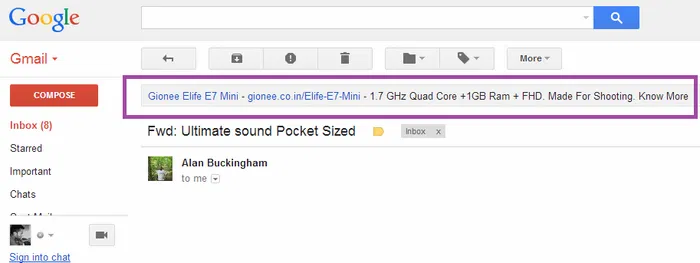
banner-ad-banner-ads-in-Gmail

2: Once you’re in the Ad Settings page, click on the “control your ad settings” link. Now scroll down to the bottom of the page where it says “Opt out of interest-based ads on Google.”
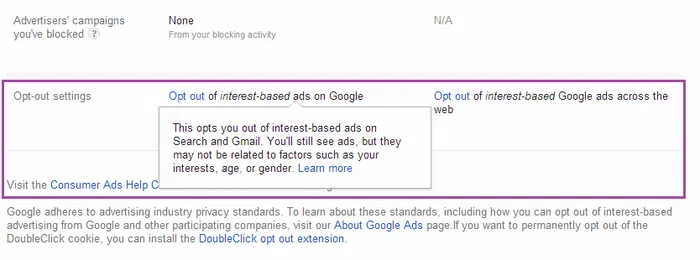
opting-out-of-Gmail-banner-ads

3: Once you click on that link, Gmail will ask you for confirmation. Click on “Opt out,” and that’s it. You will no longer see any targeted ad banners on your emails anymore.
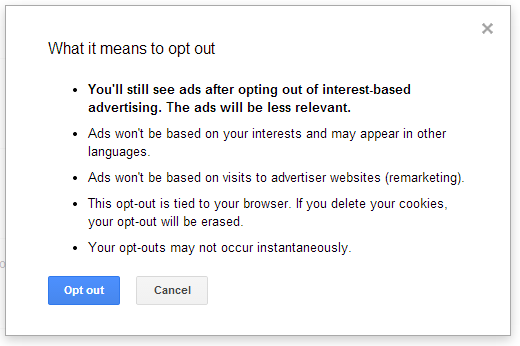
Opting-out-of-Gmail-banner-ads

We hope this helps you. If you’ve any queries, let us know via comments.

Temporarily Suspend a Tab in Chrome to Free Up System Memory

Do you often open a lot of tabs in Google Chrome, just to leave most of them untouched for hours? One way to prevent it from eating away your computer’s memory is to suspend the tab until you’re ready to use it. Here’s how to do so.

Edit Google Drive Videos Inside Chrome With WeVideo

What if you left your laptop at home and there is an urgent need to edit a video that you saved in Google Drive? Thankfully you can make use of WeVideo to edit the video directly in Google Drive.

How to Create QR Code in Google Drive

There are tons of ways to create QR code. If you are a Google Drive user, here is one quick way to create R code in Google Document

How to Create QR Codes on DuckDuckGo

If you use DuckDuckGo as your default search engine and want to create QR codes quickly, you can now create them directly on DuckDuckGo.com. Here’s how.

7 YouTube Channels Where You Can Find Computer Help

If you find video content more gripping, there is a gamut of YouTube channels that are waiting to help you solve your technology woes. Here are 7 of them.

Useful Resources to Learn Android and iOS Coding Online

If you have thought of learning how to code this summer break, here is a list of some of the most useful resources for you to learn Android and iOS coding.

Replace and Enhance Browsers Capability With These Addons

Your browser comes with some capabilities that have become obsolete. Here are some extensions to enhance browsers capability and performance.

End-To-End Encryption (And Principle) Explained

You probably have heard the term “end-to-end” plenty of times, but what is it really about? Read on to find out more.

How Does Public Key Encryption Work?

One way to encrypt your files is via the public/private key. Let’s take a look at the public key encryption concept to understand how it can protect you.

How to Get Rid of the Stickers in Comments on Facebook

Facebook added the sticker feature in its comments section. For those who dislike it, you can disable stickers in Facebook comments in Chrome and Firefox.

How Anonymous Are You on the Internet, Really?

If you really want to be anonymous on the web, here are a few things you got to know and also learn a couple of tenets.

Test Your Website in Various Mobile Devices Without Physically Owning the Devices

Google Chrome comes with a nifty tool that allows you to test how your website render in various mobile device. Here is how you can use the device mode in Chrome.